
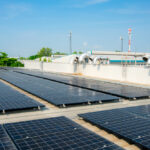

A new Massachusetts Institute of Technology (MIT) study has reaffirmed that rooftop solar panels, EV chargers, smart thermostats, and other grid-edge devices have the ability to significantly enhance power grid reliability.
The study, conducted by MIT engineers Vineet Nair and Anu Annaswamy, was published in the Proceedings of the National Academy of Sciences and proposes a novel “local electricity market” integrating these decentralized energy sources.
Grid-edge devices like residential solar panels, residential batteries, EVs, and smart appliances are located near consumers rather than traditional, centralized power plants. The study suggests these devices could be mobilized in response to cyber-attacks or natural disasters by providing power to the grid or by adjusting their consumption.
The study proposed a new framework, called EUREICA (Efficient, Ultra-Resilient, IoT-Coordinated Assets), in which grid-edge devices are Internet-of-Things (IoT)-enabled, enabling seamless communication within regional microgrids. Participating homeowners would be compensated for their contributions through a local electricity market.
According to SolarQuarter, the researchers conducted testing against various simulated grid failures, including cyber-attacks and weather-related disruptions, and found that the framework successfully rebalanced the system in each case.
“This is just the first of many steps that need to happen for local electricity markets to become a reality,” Annaswamy said. “But we believe it’s a good start.”
Read more here.