A conversation with Summit Ridge Energy’s VP of Project Development on the company’s rapid growth in Illinois, why workforce development matters as much as megawatts, and where the industry’s next wave of innovation is headed.
Company: Summit Ridge Energy
Product Focus: Community solar and energy storage development
Featuring: Brent Buchberger – Vice President of Project Development
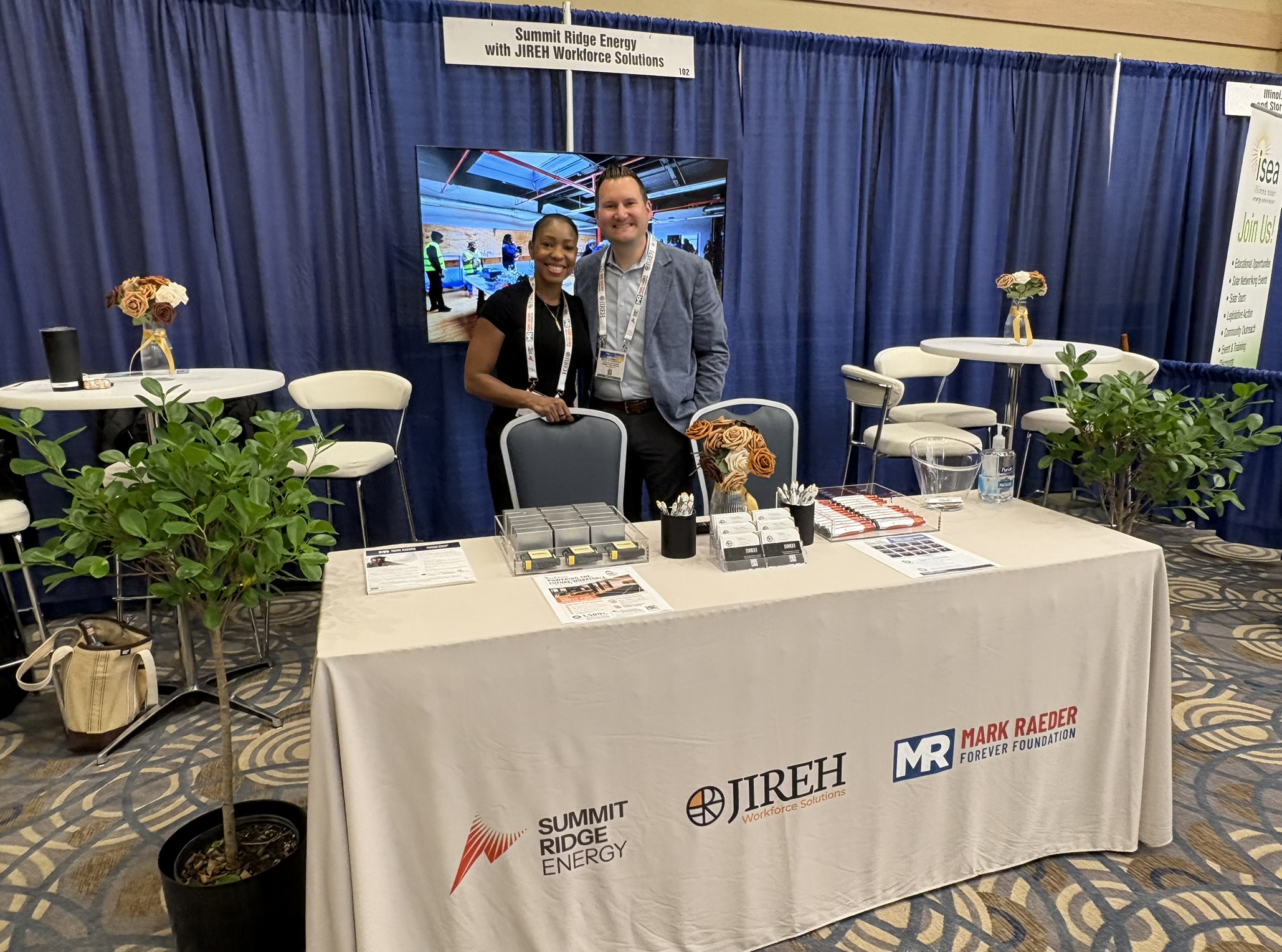
Show Presence: Highlighting partnerships with local workforce development programs, hosting a student training cohort on the show floor, and signaling active growth across Illinois and other Midwest markets

During Intersolar & Energy Storage North America (IESNA) Midwest, Digital Editor Krista Simicich spoke with Brent Buchberger, Vice President of Project Development at Summit Ridge Energy, about the company’s growth, its approach to workforce development, and his take on the challenges currently shaping the industry.
A Fast-Growing Pipeline, Built in Illinois
Summit Ridge Energy owns, develops, and operates distributed energy assets, with a focus on community solar and a growing storage business across multiple markets. The numbers tell a big part of the story.
The company has deployed $7 billion in capital across 250 projects, with a roughly 3-gigawatt pipeline currently underway. In Illinois alone, Summit Ridge has more than 560 megawatts of community solar, either operating or under active construction.
Buchberger lives in Illinois, and that local footprint means something to him personally. “A lot of that was right here in Illinois,” he said. It’s also why this show is a priority stop. “Illinois is a strong focus of ours, and we are also actively engaged in other states that are covered here by the conference,” he said.
Investing in the Workforce, Not Just the Grid
Buchberger laid out two main reasons Summit Ridge showed up to this conference, and the first one had nothing to do with pipeline numbers or new partnerships. It was about people.
As a private company building projects in Illinois communities, he doesn’t think the responsibility ends once construction wraps.
“If we’re not building a sustainable long-term pipeline of talent and providing a long-term career path here in the state, I feel like we’ll have failed,” he said. “The goal is not to just come in, build a project, and disappear. The goal is to establish something more sustaining.”
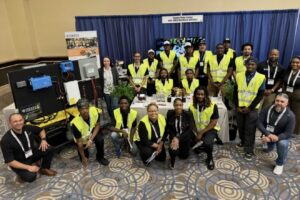
That commitment showed up in real time at the show. A group of students from JIREH Workforce Solutions, a local training program, arrived the morning of the interview, meeting with the Summit Ridge team before touring the exhibit floor. “It’s a great opportunity for us to connect with the cohorts of students who are coming through these training programs,” Buchberger said.
The second reason was simpler: making sure people know Summit Ridge isn’t slowing down. “We’re open for business,” he said. “We’re here to connect with our existing partners and new partners and talk about new business.”
The Conversation Everyone’s Having: Safe Harbor
When asked what challenges clients are bringing to him, Buchberger didn’t hesitate. “The hottest topics right now are Safe Harbor and project pipelines,” he said.
At the time of the interview, developers across the industry were racing to lock in eligibility for the commercial Investment Tax Credit (ITC) ahead of the Safe Harbor deadline, which has since passed on July 4, 2026.
Buchberger said Summit Ridge had built real expertise navigating that process, since so much of the industry was working through the same questions at once. “There’s a flurry of activity driven by the sunsetting of tax credits, and that’s forcing all those conversations to happen now,” he said.
Batteries, and the Innovation Still to Come
Asked where he sees the most opportunity for growth, Buchberger answered right away: batteries.
He said it’s been the dominant topic in his conversations with colleagues and partners all week, mostly on the commercial and industrial (C&I) and utility-scale side. Residential storage isn’t part of Summit Ridge’s business.
What he’s most curious about is the ripple effect storage is creating across the industry, including the rise of virtual power plants built from smaller batteries. “Talk about innovation,” he said. “It’s going to require utilities, developers, and our lenders to innovate as to how they’re thinking about the risk profile and revenue stream from these assets.”
Other markets already have models to draw from, but the Midwest is still figuring a lot of this out in real time, according to Buchberger. “We don’t have a lot of experience with that,” he said, “so it’ll be an exciting place.” He expects that to change fast, pointing to colleagues at the show already working out new financing and project structures to keep pace.
Buchberger summed up where the region stands right now in one line, calling the Midwest a proving ground for what comes next in battery storage. “It’s really where we’re at, especially in this region,” he said.
Interested in learning more about Summit Ridge Energy’s community solar and storage projects? Visit their website to explore their portfolio and current initiatives.