

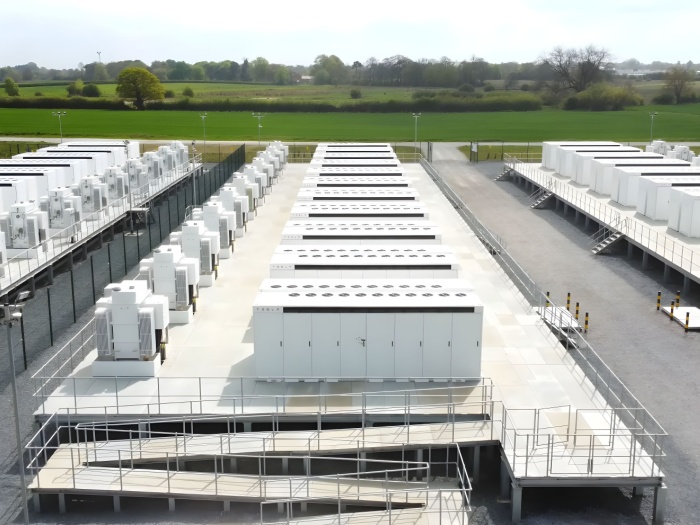
The U.S. energy storage industry installed 9.7 gigawatt-hours (GWh) of new capacity in the first quarter of 2026, the strongest first quarter on record, according to the U.S. Energy Storage Market Outlook Q2 2026 released by the Solar Energy Industries Association (SEIA) and Benchmark Mineral Intelligence.
Installations were up 32% year-over-year.
Over 610 GWh of energy storage is now projected to be installed by 2030, up from previous forecasts, as investors, developers, and grid operators respond to energy price volatility tied to disrupted global gas supplies.
According to Clean Technica, data centers are a significant driver of demand growth, with Google, Meta, and other tech companies announcing deals to procure tens of thousands of megawatt-hours (MWh) of storage this year.
“Energy storage’s remarkable first quarter only underscores the fundamental values of this technology: it’s insulated from fuel price shocks, keeps electricity costs down, and strengthens grid reliability,” said Darren Van’t Hof, interim president and CEO of SEIA.
Of the 9.7 GWh installed in Q1, 7.8 GWh were utility-scale storage, 648 MWh were commercial and industrial (C&I), and 515 MWh were residential. Texas, Arizona, and California led the nation in utility-scale battery storage capacity during the quarter.
Thirteen states now have explicit energy storage targets, with Georgia, Iowa, and Mississippi also posting notable gains.
Despite the progress, SEIA warned that federal permitting bottlenecks remain a threat to continued growth, with 467 solar and storage projects currently facing permits pending and vulnerable to delays or cancellations.
Read more here.